Tidal Draws a Hard Line on AI Music
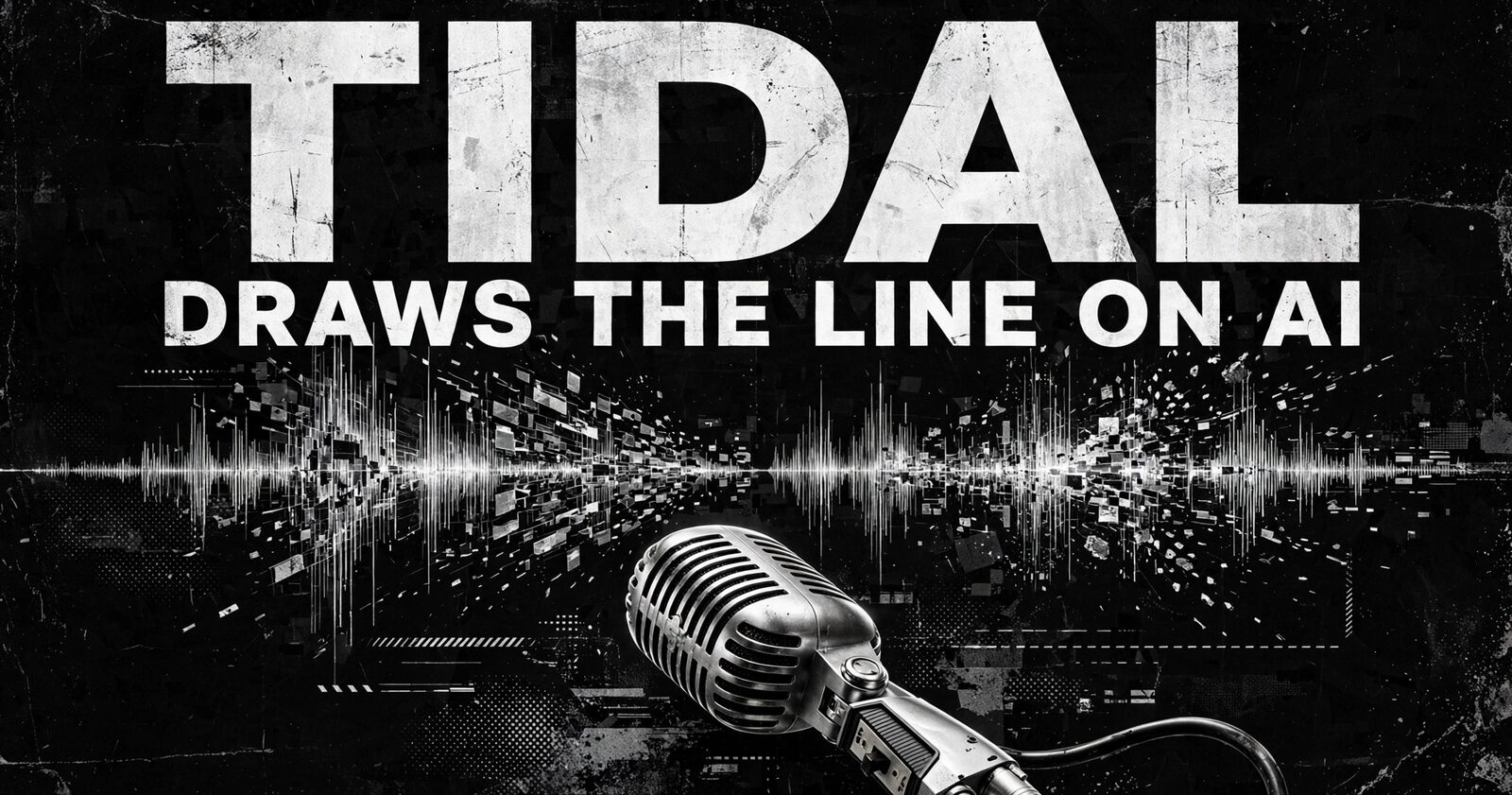
Starting December 9, Tidal will reject and remove wholly AI generated tracks. The number behind the decision should stop every working artist mid scroll.
The Flood Is the Story
Tidal announced on November 24 that from December 9 it will begin removing all wholly AI generated tracks from its catalogue and rejecting new ones at delivery. The company expects the change to delete about 29 million songs by the start of the year, and to reject an estimated 80,000 to 85,000 tracks per day after that. AI assisted music, where tools help but are not the sole output, stays allowed.
The scale explains the severity. Tidal music lead Robert Andersen said 43 percent of tracks distributed to the service in the past 90 days were detected as fully AI generated, with one day in November reaching 60 percent. Earlier this year the platform had already labelled such tracks and blocked their royalties. Management plainly decided that labelling a flood does not lower the water.
Why a Ban Protects Working Artists
A catalogue is not infinite in any way that matters. Listener attention, playlist space, search results and royalty pools are all finite, and every synthetic upload competes for the same slice as a record someone wrote, performed, mixed and paid to release. Tidal also tied the policy to impersonation, noting tracks uploaded under real artist names by people who are not those artists. That is not a technology debate. That is identity theft with a distributor account.
Other services have mostly chosen labels and filters, and Bandcamp moved earlier with its own ban on music generated wholly or in substantial part by AI. Tidal is calling itself the first major streaming service to take the full removal step, and it is urging competitors to follow. Whether they do will decide if this becomes an industry standard or a lone stand that costs Tidal catalogue size on paper.
The Line Worth Defending
My take is simple. Use every tool in the studio. Producers have always used new machines, from drum machines to Auto-Tune to sampling software, and hip hop was built by people who turned technology into voice. The line Tidal drew is not tools versus no tools. The line is a person making a record versus no person making a record at all. A track with no artist behind it is not competing fairly with an artist, it is crowding the shelf the artist pays to stand on.
There will be hard cases and detection mistakes, and Tidal itself acknowledges detection limits by starting only with wholly generated recordings. That caution is correct, and appeals will matter. But the direction is right. A platform that says human work will not be buried under unlimited synthetic supply is making a promise artists can actually build on. Toronto independent artists should watch December 9 closely, because the services that protect the shelf are the services worth prioritizing.
References
Keep Reading



Enjoyed this? Get the Daily Drop
More trending culture, hip hop history, and new music. Straight to your inbox.
More Where That Came From
Daily hip hop history, trending culture, and new music.
Stream My Music All Trending